

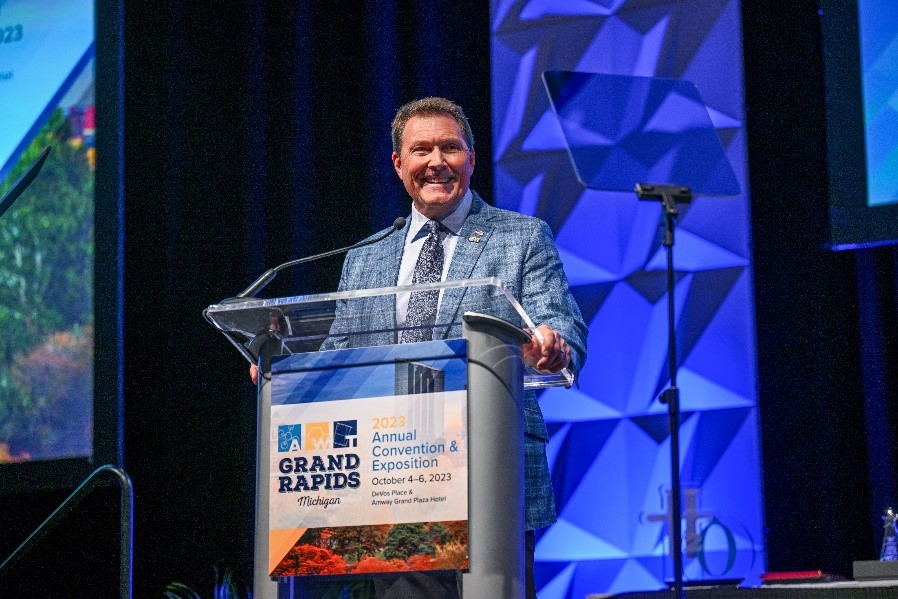
Recently, I attended the AWT Annual Awards Reception and Dinner in Grand Rapids, Michigan. This was my second time attending an AWT Conference; the first was in Providence, Rhode Island, in 2021. In both 2021 and 2023, my purpose for attending was the same: to explore the water treatment industry and foster relationships with the team of Arthur Freedman Associates (commonly known as “AFA”) consultants and other attendees. In other words, to observe and be curious – two of my favorite pastimes. In both instances, I was struck by the frequent use of the word “mentor.”
In Providence, several people shared stories with me about my grandfather, Art Freedman. I heard him described repeatedly as “a mentor,” and one person even thanked me for the way he changed their life. I suppose since they could no longer thank him directly, telling me was the next best thing.
I felt so proud that evening and still do. Having the last name “Freedman” on my name tag carried instant recognition and credibility, inviting me into a world I knew little about at the time, and yet, one in which I apparently had a significant legacy to uphold.
Fast forward to the 2023 AWT Annual Awards Reception: hearing again about the many “Industry Greats” the water treatment industry has celebrated, it dawned on me that my Grandpa Art wasn’t unique in how he mentored those following him. In fact, he was average – in the best possible sense.
Throughout my career, I’ve observed several industries. While mentoring is prevalent everywhere, it is often informal and inconsistent. In most sectors, having a transformative mentor is reserved for exceptionally savvy or lucky employees. But in the niche world of water treatment, mentoring isn’t just common – it’s a pillar of the industry, as vital as cooling towers, boilers, reverse osmosis, and wastewater treatment.
In Grand Rapids, the mentor’s name echoed repeatedly from the podium was “Rob.” He certainly has a last name – Ferguson – but to my recollection, no one included it in their tribute. No one needed to. If that doesn’t signify someone’s lasting impact on countless individuals, I don’t know what does.
At the reception dinner that followed, I asked one of our consultants at AFA, Walt Tyler, about the prevalence of mentoring in the industry. From his perspective, it stems from the fact that most consultants hold degrees in chemistry or engineering, which don’t naturally lead to water treatment. He elaborated, “No one graduates college thinking, ‘I’m going to work in the water treatment industry.’ There’s no major for that. So, everything you learn is because someone taught it to you.”
Curious, I delved deeper into the definition of “mentor.” Various sources described it with phrases like “experienced and trusted advisor” or “train a younger colleague.” I also found synonyms like “coach,” “teach,” and “guide.” However, these aren’t true synonyms. They begin to depict what a mentor does. A genuine mentor – like those whose names are heralded from podiums – offers so much more.
Each synonym has subtle, yet crucial distinctions:
• Teacher: Someone knowledgeable who imparts it to those who benefit.
• Guide: Someone who shares personal knowledge and experience to illuminate a path forward.
• Coach: Someone assisting another in achieving goals based on the latter’s experiences and insights.
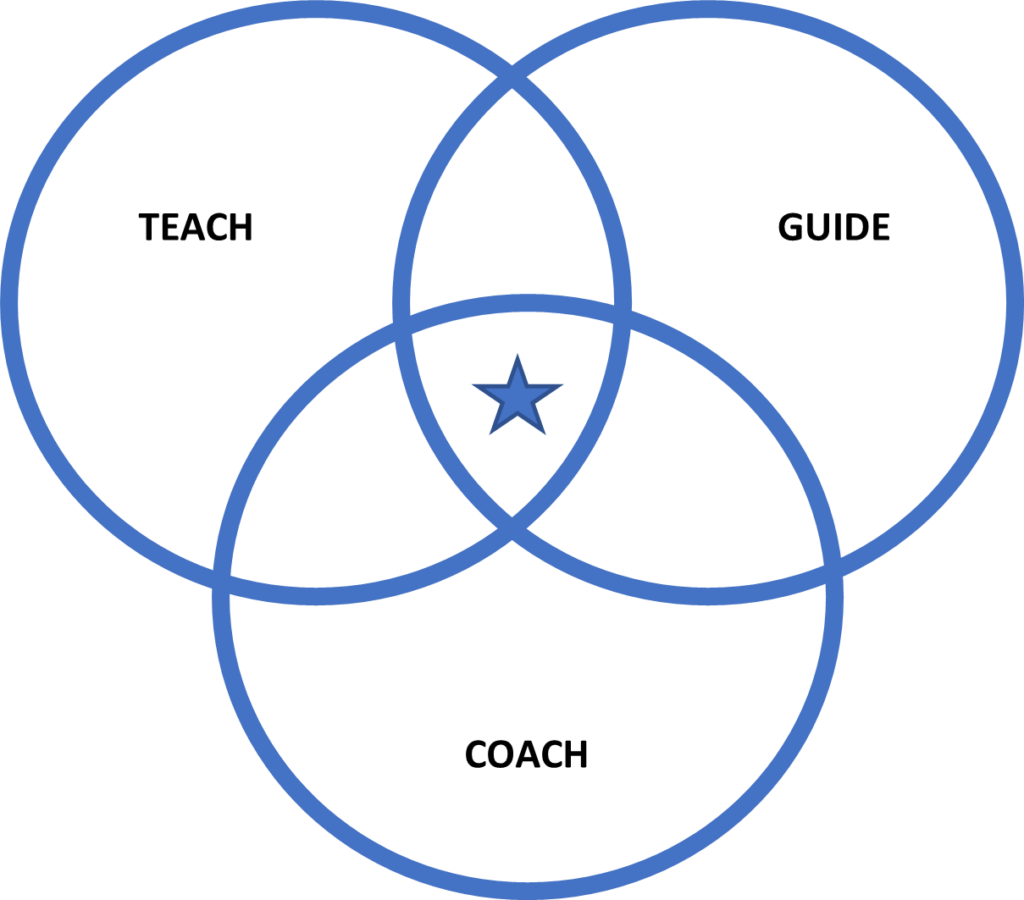
Visualize someone entering your life who seamlessly shifts among these roles. This sweet spot defines the type of mentors often part of the water treatment industry.
Industry stalwarts like Rob Ferguson, Ray Baum, and my Grandpa Art exemplify this mentorship. They introduced the subsequent generation to relevant science, advanced tools like French Creek Software, and field consulting skills. They guided newcomers into the industry, urging them to network, join associations, and volunteer. And, naturally, they provided coaching whenever they were sought for advice.
In essence, the water treatment industry’s esteemed mentors shaped the industry itself. They faced challenges, evolved through trial and error, and imparted their insights, experiences, and wisdom. I struggle to think of another industry quite like this.
This leads to a pressing concern: As these luminaries depart, like my Grandpa Art did in 2015 or Rob just this year, will this unique style of mentorship become a thing of the past?
Perhaps we should ask: if so, is that a bad thing? Didn’t they aim to establish a robust foundation for the industry to grow upon? Although a degree in industrial water treatment isn’t standard yet, new entrants have access to a myriad of resources, events, and training opportunities, surpassing what was imaginable for the previous generation. That’s good.
However, I find the idea of mentorship fading hard to fathom. It’s too deeply ingrained in the industry. And that’s even better.
As I type this, I am sitting at my Grandpa Art’s old desk, gazing at a timeworn apple-shaped paperweight. To me, this apple symbolizes his legacy, a gift from an industry individual who considered him a mentor. Who gave it to my grandpa remains unknown – maybe they’re reading this now. To that anonymous benefactor: your gift remains treasured, a testament to the profound impact we can have on each other.
If the current generation of industry experts have learned one lesson, it’s that mentors leave an indelible mark. Thus, I’m optimistic that this mentoring legacy will persist, with the current generation stepping into their mentor’s shoes.